
RP Program Strategy & 2-Year Roadmap
ERP Program Strategy & 2-Year Roadmap: Local Delivery Ownership with Specialized External Expertise
Project Overview
At Lapeyre & Saint-Gobain, I contributed to the ERP transformation program by defining the delivery strategy and building a 2-year execution roadmap to modernize core operations while protecting business continuity.
The program covered both back-end ERP implementation (core platform + integrations) and a front-end rollout (store and logistics workflows), with a strong emphasis on planning, capacity modeling, and coordination across internal and external stakeholders.
Business Need & Initial Challenges
The organization needed an ERP foundation that could scale nationwide, integrate with existing mission-critical tools, and support retail + logistics execution (sales, receiving, shipping, inventory, and stock accuracy). The challenge was to structure a delivery approach that balanced control, speed, risk management, and specialist expertise.
Key constraints included complex legacy dependencies, parallel workstreams (ERP + front-end), and the need to estimate realistic capacity (internal teams vs. external specialists) over a multi-year horizon.
My Role & Responsibilities
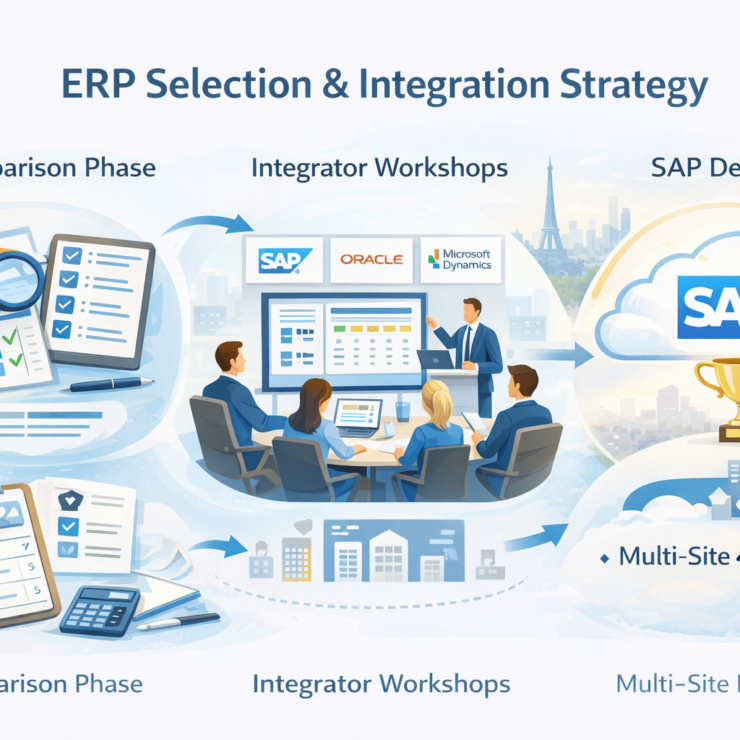
I helped define the program strategy by keeping local delivery ownership (hands-on operational control and day-to-day orchestration) while delegating selected components to highly specialized external experts available on the Paris market.
My core responsibility was to build and maintain a 2-year roadmap split into two coordinated tracks:
- Back-end roadmap: ERP implementation/configuration, integration of existing tools to preserve critical business workflows, and definition of integration interfaces (APIs).
- Front-end roadmap: delivery planning for retail store processes (point of sale execution) and logistics processes (receiving, shipping, inventory, stock operations).
I also produced capacity plans and resourcing scenarios (internal staffing vs. external delivery), ensuring stakeholders had a clear view of effort, sequencing, and dependencies.
Solution Design & Implementation Approach
The roadmap was designed to reduce delivery risk through phased rollout and strong dependency control:
- Wave planning (progressive deployment over multiple regions/stores)
- Integration-first thinking to protect legacy-critical processes during transition
- Governance & reporting to keep stakeholders aligned and decisions traceable
This approach enabled a realistic multi-year execution plan while keeping agility to re-prioritize based on operational constraints and business outcomes.
Tools, Technologies & Environment
- ERP: SAP (program context)
- Program artifacts: Roadmaps (Back-end / Front-end), dependency mapping, capacity plans, delivery waves
- Integration scope: Legacy tool preservation + interface/API strategy
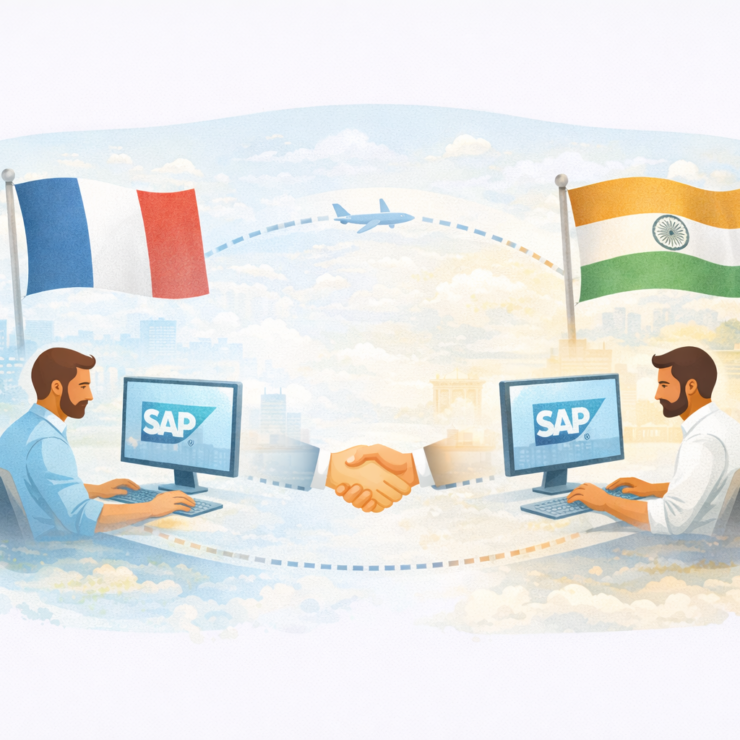
- Operating model: Internal ownership + external specialist delivery (hybrid model)
Project KPIs & Delivery Metrics
- Multi-year roadmap: 2 years (phased rollout)
- Multi-stream delivery: Back-end ERP + Front-end retail/logistics enablement
- Capacity planning: resourcing scenarios (internal vs. external), effort estimation, dependency-based sequencing
Results & Business Impact
This work provided leadership with a structured, realistic plan to execute a complex ERP program with controlled risk and clear sequencing. It also created a shared reference for stakeholders across business, IT, and external partners—reducing ambiguity and improving execution discipline.
Skills Developed
- Product/Program Strategy: operating model design, roadmap structuring, outcome-driven sequencing
- Delivery & Execution: dependency management, capacity planning, cross-team coordination
- Stakeholder Leadership: alignment of business/IT/external experts, governance & reporting
- Systems Thinking: ERP + legacy coexistence strategy, integration-led modernization
Knowledge & Key Learnings
I strengthened my ability to translate a large transformation into an executable roadmap—balancing delivery ownership, specialist outsourcing, and operational continuity. I also reinforced the discipline required to manage dependencies and resourcing at scale.
Why This Experience Matters for My Next Role
This program demonstrates my ability to operate at the intersection of business transformation, platform strategy, and execution—building roadmaps that stakeholders can actually deliver. It directly supports senior roles such as Senior Product Manager / Product Lead / Head of Product in complex B2B environments where prioritization, governance, and cross-functional alignment are critical.